The Science of Addiction: How Drugs and Alcohol Change the Brain
Atrium Addiction Care Staff
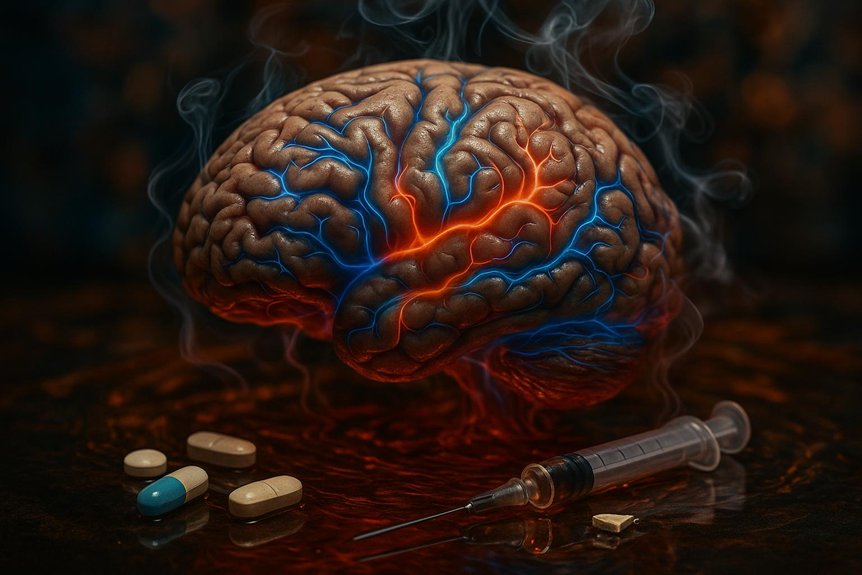
You might not realize how profoundly drugs and alcohol can alter your brain's function and structure. By hijacking the brain's reward system, these substances disrupt key neurotransmitters like dopamine and serotonin. This imbalance leads to compulsive behaviors and emotional instability. Structural changes, such as decreased gray matter in the prefrontal cortex, impair decision-making and amplify stress responses. Understanding these transformations is essential for tackling addiction's challenges. Curious about how these changes unfold?
The Brain's Reward System and Substance Use
When you explore the brain's reward system, it becomes clear how substance use can hijack this intricate network. The reward circuitry is designed to reinforce behaviors critical for survival. However, substances can exploit this system, creating powerful substance reinforcement. They activate neural pathways that amplify craving mechanisms, often leading to motivational deficits and behavioral triggers.
Substance use hijacks the brain's reward system, amplifying cravings and triggering motivational deficits.
Emotional regulation becomes compromised as these substances alter the brain's response to natural rewards.
Environmental influences and social factors further complicate the scenario, as they can act as cues that heighten cravings. Withdrawal symptoms then emerge, reinforcing the cycle of use.
Understanding these dynamics reveals how substances manipulate the brain's reward system, emphasizing the importance of addressing these factors in addiction treatment.
How Addiction Alters Brain Chemistry
When you examine how addiction alters brain chemistry, you'll find that neurotransmitter imbalances play an essential role, disrupting normal communication between neurons.
The dopamine pathway, vital for pleasure and reward, undergoes significant changes, often leading to compulsive behavior.
Additionally, structural changes in the brain can reinforce addictive behaviors, making recovery more challenging.
Neurotransmitter Imbalance Effects
Addiction profoundly alters brain chemistry by disrupting the delicate balance of neurotransmitters. When you engage in substance use, neurotransmitter fluctuations occur, impacting vital functions like mood regulation. These fluctuations can lead to imbalances that affect how you feel and behave.
Normally, neurotransmitters like serotonin and GABA help maintain emotional stability. However, addiction disturbs this equilibrium, causing mood swings and heightened anxiety.
Research shows that substances can either overstimulate or deplete neurotransmitter levels. For instance, alcohol might increase GABA activity temporarily, leading to relaxation, but chronic use depletes it, resulting in anxiety and irritability.
With ongoing addiction, your brain struggles to restore balance, leading to a cycle of dependency. Understanding these changes is essential for developing effective treatment strategies.
Dopamine Pathway Alterations
Although addiction disrupts many brain functions, its impact on the dopamine pathway is particularly profound. When you engage in addictive behaviors, dopamine dysregulation occurs, meaning the brain's natural ability to manage dopamine is impaired. This neurotransmitter, essential for reward prediction, becomes overactive.
Your brain starts predicting rewards inaccurately, leading to heightened cravings and compulsive behavior.
Addiction hijacks the reward system, causing dopamine surges that reinforce unhealthy behaviors. Over time, the brain's reward prediction becomes skewed, making natural rewards less satisfying.
This altered chemistry perpetuates the cycle of addiction, as your brain constantly seeks the intensified dopamine rush rather than normal pleasures. Understanding these changes highlights the challenge of overcoming addiction, emphasizing the need for targeted interventions.
Need Help Finding Treatment?
Our specialists can help you find the right substance abuse treatment program. Free, confidential, available 24/7.
Get Help Today: (855) 410-4488Brain Structure Changes
Beyond dopamine pathway alterations, addiction also triggers significant changes in brain structure that further complicate its chemistry. Structural imaging reveals that addiction impacts brain development by reducing cortical thickness and altering synaptic pruning. These changes diminish gray matter in critical brain regions, affecting neural connectivity and increasing addiction vulnerability.
| Factor | Impact on Brain |
|---|---|
| Cortical Thickness | Reduction in key regions |
| Synaptic Pruning | Altered, leading to connectivity |
| Gray Matter | Decrease, affecting resilience |
Addiction affects brain resilience, complicating recovery potential. Structural imaging studies show that altered neural pathways challenge the brain’s ability to recover, highlighting addiction's profound impact. Understanding these changes can inform strategies to enhance brain resilience and promote recovery, addressing specific vulnerabilities in affected brain regions.
Key Neurotransmitters in Addiction
When examining the science of addiction, understanding key neurotransmitters is essential. Neurotransmitter interactions play a vital role in brain signaling, influencing addiction's development.
Dopamine is often center stage, driving the brain's reward system. When you use addictive substances, dopamine levels surge, reinforcing the behavior and creating a cycle of craving and use.
Serotonin, another neurotransmitter, impacts mood and decision-making. Substances that alter serotonin levels can exacerbate addiction by affecting emotional regulation.
Additionally, glutamate is involved in cognitive functions like learning and memory, which drugs can hijack, reinforcing addictive behaviors.
These neurotransmitters don't act in isolation; they interact in complex networks, altering how your brain processes rewards and decisions. Understanding these interactions helps explain why overcoming addiction is so challenging.
How Addiction Reshapes Brain Structure
You’ll find that addiction considerably alters brain structure through neuroplasticity, affecting pathways linked to behavior and decision-making.
These changes particularly impact the brain's reward system, heightening cravings and reducing control.
Evidence shows that prolonged substance use can lead to measurable structural changes, contributing to the cycle of addiction.
Neuroplasticity and Addiction Pathways
Although addiction often seems like a loss of control, it's deeply rooted in the brain's ability to adapt and change, known as neuroplasticity.
Neuroplasticity mechanisms play a pivotal role in how addiction reshapes brain pathways, impacting decision-making and behavior. When you repeatedly use substances, your brain reinforces these pathways, making them more dominant.
Here's how it happens:
- Synaptic Strengthening: Repeated exposure strengthens synaptic connections related to addictive behaviors.
- Pathway Prioritization: Brain circuits favor those associated with substance use, altering decision-making.
- Recovery Potential: Understanding neuroplasticity opens avenues for addiction recovery through therapy that rewires these pathways.
Reward System Alterations
While addiction reshapes the brain's structure, it particularly transforms the reward system, which is central to motivation and pleasure. Drugs alter reward prediction, making everyday activities less satisfying. You develop craving mechanisms that drive repeated use. This cycle leads to behavioral reinforcement—compelling you to seek substances despite negative outcomes. Emotional dysregulation becomes prominent, with mood swings fueled by withdrawal symptoms. Cognitive distortions cloud judgment, enhancing reliance on substances. Social influences and environmental triggers exacerbate these patterns, reinforcing addiction's grip.
| Factor | Impact on Reward System |
|---|---|
| Withdrawal Symptoms | Intensify cravings |
| Craving Mechanisms | Drive repetitive use |
| Behavioral Reinforcement | Encourages continued substance use |
| Emotional Dysregulation | Leads to mood instability |
Understanding these alterations helps in addressing addiction effectively.
Structural Brain Changes
Addiction fundamentally reshapes brain structure, particularly impacting areas responsible for decision-making, impulse control, and stress regulation. Neuroimaging studies reveal significant changes in brain connectivity, illustrating how addiction alters pathways essential for cognitive function.
- Prefrontal Cortex Alterations: Chronic substance use reduces gray matter, impairing your ability to make sound decisions.
- Hippocampal Damage: Addiction affects memory and learning, as seen in reduced hippocampal volume, leading to difficulties in forming new memories.
- Amygdala Changes: Increased activity in this region heightens stress response, contributing to anxiety and relapse.
These structural modifications aren’t just theoretical; they’re tangible alterations observed under the lens of science.
How Tolerance and Dependence Develop
Understanding how tolerance and dependence develop is essential in grasping the complexity of addiction. Tolerance mechanisms occur when your brain adapts to substances, requiring more to achieve the same effect. This increased use fuels the dependence cycle, where withdrawal symptoms manifest if you stop.
Behavioral changes often follow, influenced by environmental triggers and psychological factors, such as stress. You might find yourself relying on substances as coping strategies, reinforcing the cycle of dependence.
Genetic predisposition plays a role, making some individuals more susceptible to these changes. These elements intertwine, creating a challenging landscape for those affected.
Recognizing these patterns helps in addressing addiction's root causes, offering a pathway towards recovery by mitigating triggers and developing healthier coping strategies.
How Genetics Influence Addiction Risk
Genetic factors greatly influence addiction risk, intertwining complex biological processes that shape individual susceptibility. You’re not just dealing with choices but underlying genetic predispositions.
Heritability studies reveal how familial patterns contribute to addiction, highlighting inherited vulnerabilities. Environmental interactions further modulate these risks by influencing gene expression and epigenetic factors.
Consider these points:
- Risk Assessment: Identifying genetic markers helps predict susceptibility, allowing for personalized prevention strategies.
- Biological Markers: Specific genes linked to addiction can indicate higher risk, offering insights into tailored interventions.
- Epigenetic Factors: Life experiences alter gene activity without changing DNA, impacting addiction vulnerability.
Understanding these dynamics provides a thorough view of how genetics and environment intertwine, shaping addiction risk.
Decision-Making Challenges in Addiction
While grappling with addiction, the brain's decision-making processes become considerably impaired. You experience decision fatigue due to constant internal battles, weakening impulse control and leading to impaired judgment. Emotional regulation becomes challenging, affecting your risk assessment abilities. Cognitive distortions cloud your thinking, making delayed gratification seem impossible. Social influences and environmental triggers further complicate decisions, as they often cue cravings, creating motivational deficits.
Consider this table:
| Challenge | Effect |
|---|---|
| Decision Fatigue | Weakens impulse control |
| Impaired Judgment | Poor risk assessment |
| Emotional Regulation | Heightens cognitive distortions |
| Social Influences | Amplifies environmental triggers |
Your decisions are no longer solely yours, but a tug-of-war influenced by addiction's grip on your brain's capacity for rational thinking.
Emerging Treatments for Addiction
As science advances, new treatments for addiction are emerging, offering hope and innovative approaches.
You're seeing a shift toward integrating technology and holistic approaches. Here's how:
- Novel Therapies: Genetic research is paving the way for personalized pharmacological advancements, targeting how drugs affect your brain distinctly.
- Behavioral Interventions: Mindfulness practices and technology integration are enhancing traditional methods, making them more accessible and effective.
- Community Support and Policy Changes: Stigma reduction through community efforts and updated policies is essential.
These changes foster an environment where seeking help is encouraged and supported.