Inpatient vs Outpatient Rehab: Choosing the Right Level of Care
Atrium Addiction Care Staff
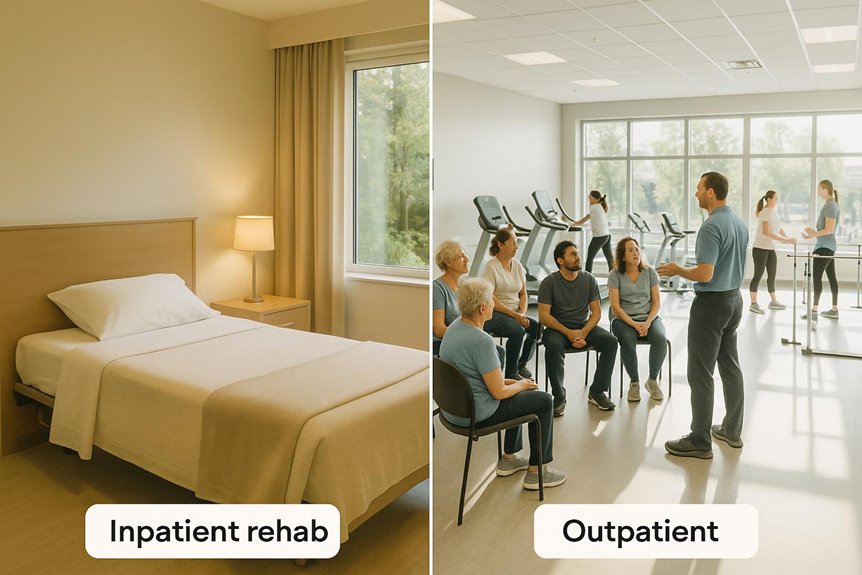
When you’re deciding between inpatient and outpatient rehab, consider your unique needs and circumstances. Inpatient rehab provides a structured, immersive environment with 24/7 medical support, essential for those needing intensive intervention. Conversely, outpatient rehab offers flexibility, allowing you to maintain daily responsibilities while undergoing treatment. Evaluating personal readiness, support systems, and financial aspects is important. Consult healthcare professionals to determine the best path for long-term recovery, but remember, the choice profoundly impacts your journey.
Choosing Between Inpatient and Outpatient Rehab
How do you decide between inpatient and outpatient rehab? It’s essential to assess the rehab environment and patient motivation.
Inpatient rehab offers a structured setting, perfect for those needing intensive support and monitoring. Here, you’re immersed in a therapeutic milieu, away from external triggers, which can enhance focus on recovery.
A structured setting for intensive support, away from triggers, enhances recovery focus in inpatient rehab.
On the other hand, outpatient rehab allows you to maintain daily responsibilities while attending scheduled treatment sessions. This option suits individuals with strong patient motivation and a supportive home environment. It requires a commitment to balancing treatment with daily life challenges.
Ultimately, the choice hinges on your specific needs, including the severity of addiction and personal circumstances.
It’s important to consult healthcare professionals to tailor the best treatment path.
How to Determine Your Rehab Needs
Determining your rehab needs starts with a thorough evaluation of your addiction severity and personal circumstances.
Begin with an initial assessment to gauge your substance use patterns, co-occurring disorders, and relapse history.
Assess your personal readiness for change—are you motivated and committed to recovery?
Consider your support systems, such as family involvement and peer networks, which play an essential role in sustaining long-term sobriety.
Examine lifestyle factors that might influence your treatment, like work commitments or living conditions.
Define your treatment goals clearly to guarantee they align with your recovery journey.
Understanding these elements helps tailor a rehab plan that addresses your specific needs, setting a solid foundation for successful recovery.
The Structure of Inpatient Rehab
Inpatient rehab provides a structured environment vital for intensive recovery. You'll find a treatment environment designed to support your journey with round-the-clock medical supervision and evidence-based therapies.
Need Help Finding Treatment?
Our specialists can help you find the right substance abuse treatment program. Free, confidential, available 24/7.
Get Help Today: (855) 410-4488Daily schedules are packed with therapeutic activities, including individual and group counseling, aimed at addressing underlying issues and building coping skills.
Peer support plays an important role, offering shared experiences and encouragement from others on the same path. This camaraderie fosters a sense of community and accountability, helping you stay focused on recovery milestones.
Each day, you'll participate in activities designed to enhance physical, emotional, and mental well-being, ensuring a holistic approach to healing.
This immersive setting allows you to concentrate fully on recovery, away from external distractions and triggers.
Why Outpatient Rehab Offers Flexibility
While inpatient rehab offers intensive support, outpatient rehab provides the flexibility vital for those balancing recovery with daily responsibilities. You can create personalized schedules that fit your lifestyle, allowing for seamless integration of treatment and daily obligations.
Outpatient programs offer diverse therapy options, fostering community support and enhancing family involvement, essential for holistic recovery.
Diverse therapies in outpatient care build community bonds and strengthen family ties for complete recovery.
With outpatient care, you’ll have access to relapse prevention strategies and accountability measures that help maintain sobriety. This approach encourages active participation in your home environment, promoting sustainable change.
Transportation access guarantees you can attend sessions without disrupting your routine, making it easier to remain committed. By choosing outpatient rehab, you embrace a recovery path that adapts to your unique needs, offering both structure and freedom.
Comparing Costs: Inpatient vs. Outpatient Rehab
When comparing the costs of inpatient and outpatient rehab, you should consider how treatment duration impacts overall expenses.
Inpatient programs often involve higher upfront costs due to 24/7 care, but they might be more thorough.
Insurance coverage varies greatly, so examining your policy’s specifics is essential to understanding potential out-of-pocket expenses for each option.
Treatment Duration Impact
Although treatment duration greatly influences costs, understanding the financial differences between inpatient and outpatient rehab is essential for informed decision-making.
Inpatient programs typically involve a fixed stay, leading to higher expenses but offering intensive support through structured treatment timelines. Outpatient rehab, on the other hand, allows you to continue daily activities while attending sessions, often resulting in lower costs.
Here's what to take into account:
- Treatment Timelines: Inpatient care usually follows a set schedule, while outpatient programs offer flexibility, potentially extending the duration.
- Recovery Milestones: Inpatient settings often accelerate reaching recovery milestones due to constant supervision and support.
- Cost Implications: Longer inpatient stays can be expensive, but the focused environment may reduce relapse chances, balancing long-term costs.
Insurance Coverage Differences
Understanding insurance coverage differences between inpatient and outpatient rehab can greatly impact your financial planning.
Inpatient rehab typically involves more intensive treatment, which might lead to higher costs. However, your insurance policy might cover a substantial portion of these expenses, depending on your policy's specifics.
When examining coverage limitations, you should scrutinize how many days of inpatient care are covered versus outpatient sessions.
Outpatient rehab is often less expensive, but it's essential to compare policy details to guarantee adequate support for this option.
Policy comparisons are key; some insurers may favor outpatient treatment, offering more extensive coverage for therapy sessions and medications.
Always verify with your provider to determine what's covered to avoid unexpected expenses and ensure ideal care access.
Impact on Daily Life
Choosing between inpatient and outpatient rehab greatly impacts your daily life. Inpatient care requires significant lifestyle changes, disrupting your daily routine and affecting personal commitments. Here’s what to contemplate:
1. Support Systems and Family Dynamics: Inpatient treatment immerses you in a therapeutic environment, but limits direct social interactions with family.
Outpatient care, on the other hand, allows you to maintain family dynamics and leverage your existing support systems.
2. Work Obligations and Social Interactions: Outpatient rehab offers flexibility to manage work obligations and maintain social interactions, while inpatient care necessitates a temporary leave from these responsibilities.
3. Emotional Well-Being: Inpatient settings provide intensive support for Emotional Well-Being, offering structured therapy.
Outpatient care supports gradual lifestyle changes, integrating treatment into your everyday life.
Making the Best Choice for Long-Term Recovery
When considering the best path for long-term recovery, it’s crucial to evaluate how each rehab option aligns with your personal goals and circumstances. Your choice impacts support systems, personal motivation, and relapse prevention. Inpatient rehab offers structured environments with intensive therapy, which can enhance coping strategies and mental health stability. Conversely, outpatient programs allow for lifestyle changes without disrupting daily life, encouraging family involvement.
| Factor | Inpatient Rehab | Outpatient Rehab |
|---|---|---|
| Support Systems | Intensive, on-site | Community-based, flexible |
| Personal Motivation | Structured routines | Self-directed initiatives |
| Relapse Prevention | Constant supervision | Continued exposure to daily triggers |
| Aftercare Plans | Integrated, thorough | Personalized, adaptable |
| Family Involvement | Limited during treatment | Actively encouraged throughout |
Choose what best supports your journey.